Spider Infestation in Beloit Homes: Identification & Safe Removal
Finding a single spider in the corner of your Beloit basement is one thing. Discovering webs accumulating in every room, spiders dropping from ceiling fixtures, or identifying a potentially dangerous species on your property is another matter entirely. Spider infestations in southern Wisconsin homes indicate an underlying pest ecology issue because spiders are predators that congregate where prey is abundant. A home overrun with spiders almost always has an underlying insect problem feeding the population. Professional pest control in Beloit addresses both the visible spider problem and the prey insect populations sustaining it for lasting results.
Beloit's position along the Rock River, its mature urban tree canopy, and the abundant outdoor lighting in residential and commercial areas create conditions that support robust spider populations throughout Rock County. Most spiders found in and around Beloit homes are harmless and even beneficial, consuming flies, mosquitoes, and other nuisance insects. However, certain species warrant concern, and heavy infestations indicate conditions that should be corrected for both comfort and safety.
Dangerous Spiders in the Beloit Area
While southern Wisconsin hosts relatively few dangerous spider species compared to warmer regions, two medically significant spiders do occur in the Beloit area, and knowing how to identify them protects your family from potentially serious bites.
Brown Recluse Spider
The brown recluse spider occupies a complicated position in Wisconsin pest identification. While southern Wisconsin sits at the extreme northern edge of the brown recluse's established range, confirmed specimens have been documented in Rock County and neighboring areas. These spiders are light to medium brown with a distinctive dark violin-shaped marking on the cephalothorax, with the neck of the violin pointing toward the abdomen. Adults measure roughly the size of a quarter including legs.
Brown recluse spiders are shy, nocturnal, and prefer undisturbed spaces like storage boxes, closets, basement corners, and areas behind furniture that rarely moves. They do not build conspicuous webs. Bites typically occur when a spider is trapped against skin inside clothing, bedding, or shoes. Brown recluse venom can cause necrotic lesions that require medical treatment, though severe reactions are relatively uncommon.
In Beloit, brown recluse spiders are most likely to be found in older homes with cluttered basements, garages, and storage areas. Properties that receive shipments from southern states should be aware that brown recluse spiders frequently hitchhike in boxes and packing materials. If you suspect you have identified a brown recluse in your home, capture the specimen in a jar for professional identification rather than relying on photographs, as several common harmless species are frequently misidentified as brown recluse.
Northern Black Widow Spider
The northern black widow spider is present throughout southern Wisconsin, including Rock County. While less common than its southern relative, the northern black widow builds irregular webs in sheltered outdoor locations and occasionally enters garages, sheds, and basement window wells. Females are shiny black with red markings on the underside of the abdomen, though the northern species often has a broken hourglass pattern or red and white markings on the dorsal side rather than the clean hourglass associated with the southern black widow.
Black widow bites are medically significant and produce symptoms including severe muscle pain, cramping, and in rare cases, systemic reactions requiring emergency medical treatment. Children and elderly individuals are at highest risk for severe reactions. In Beloit, black widows are most commonly found in wood piles, stone walls, meter boxes, basement window wells, and undisturbed corners of garages and outbuildings. Properties along the Rock River bluffs and in areas with abundant rock landscaping provide particularly suitable black widow habitat.
Common Household Spiders in Beloit
The majority of spiders encountered in Beloit homes are harmless species that benefit the household by reducing flying and crawling insect populations. Understanding which spiders are harmless helps homeowners make informed decisions about when to tolerate beneficial predators and when to seek professional treatment.
Common House Spider
The common house spider builds the messy, tangled cobwebs found in corners, basements, and garages throughout Beloit homes. These small, brownish spiders with mottled markings are completely harmless and rarely bite even when handled. Their webs, while unsightly, trap significant numbers of flies, gnats, and other small insects. Heavy cobweb accumulation indicates either a large house spider population or infrequent cleaning, and typically correlates with high prey insect density in the home.
Wolf Spiders
Wolf spiders are among the most alarming spiders to encounter due to their size and speed. These ground-hunting spiders do not build webs and instead run down their prey across floors, walls, and outdoor surfaces. Wolf spiders commonly found in Beloit homes measure up to an inch and a half including legs, with stout brown bodies and distinctive eye patterns. They frequently enter homes in fall as temperatures drop, particularly through ground-level gaps in foundations and beneath garage doors.
Despite their intimidating appearance, wolf spiders are not dangerous to humans. Their bites, while possible if the spider is trapped or handled, produce mild, temporary irritation comparable to a bee sting. Wolf spiders are solitary and do not infest in the way that web-building species do. Seeing multiple wolf spiders indoors typically means the home has accessible entry points at ground level rather than an indoor breeding population.
Cellar Spiders
Cellar spiders, often called daddy longlegs, build loose, irregular webs in basement corners, crawlspaces, and utility areas. These delicate, long-legged spiders are completely harmless and are actually effective predators of other spiders, including more concerning species. Beloit basements, particularly in older homes with stone or block foundations that maintain higher humidity levels, often support substantial cellar spider populations. While their webs are unsightly, these spiders provide genuine pest control value.
Sac Spiders
Yellow sac spiders are the most commonly biting spider in Wisconsin homes. These pale yellow to light green spiders build small silk tubes in upper wall-ceiling junctions and behind picture frames. They are active hunters at night, and bites typically occur when a spider is inadvertently pressed against skin while a person is sleeping. Sac spider bites produce a localized reaction with redness, swelling, and mild pain lasting a few days. While not dangerous, repeated bites in a bedroom setting warrant treatment to reduce the indoor population.
Why Spider Infestations Happen in Beloit Homes
Understanding why spiders accumulate in your home guides effective control strategies. Spiders are not attracted to your home for warmth or shelter in the way that mice or ants are. They follow their food supply. A home with abundant prey insects will attract and sustain a larger spider population than a home with controlled insect levels.
Exterior lighting plays a major role in spider accumulation on Beloit homes. Standard white and yellow porch lights, security lights, and decorative lighting attract flying insects, which in turn attract web-building spiders that position themselves near these insect aggregation points. Properties with extensive exterior lighting often develop heavy spider web accumulation around light fixtures, door frames, and window casings during summer months.
Moisture issues contribute to both spider and prey insect populations. Damp basements and crawlspaces support populations of springtails, silverfish, and other moisture-dependent insects that serve as spider food sources. Beloit homes with chronic basement moisture problems, particularly in low-lying areas near the Rock River and Turtle Creek, often experience elevated spider activity compared to homes with dry basements.
Vegetation touching the home provides direct pathways for spiders and their prey to access the structure. Shrubs, vines, tree branches, and ground cover plants growing against the foundation and exterior walls allow spiders to bridge from outdoor habitat to indoor spaces without crossing treated perimeters. Many Beloit homes in established neighborhoods have mature landscaping that has grown into contact with the structure over decades.
Professional Spider Control for Beloit Homes
Effective spider management requires addressing both the spiders themselves and the conditions supporting their presence. A comprehensive approach delivers lasting results rather than temporary knockdown.
Targeted Interior Treatment
Professional interior spider treatment focuses on applying residual insecticides to harborage areas where spiders rest and travel. This includes baseboard perimeters, window casings, door frames, basement walls, and utility areas. Dust formulations applied to wall voids, attic spaces, and behind outlet covers provide long-lasting control in concealed areas where spiders nest. The treatment simultaneously reduces prey insect populations, removing the food source that sustains spider density.
Exterior Perimeter and De-Webbing
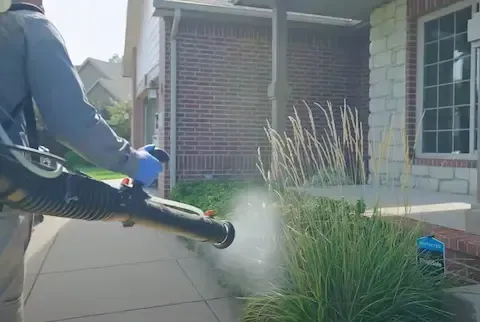
Professional exterior treatment creates a treated barrier around the home's perimeter that intercepts spiders and prey insects before they enter. This includes foundation treatment, eave and soffit application, and targeted treatment around windows, doors, and light fixtures. Regular de-webbing service removes existing webs and egg sacs, preventing the next generation from establishing.
Integrated Pest Management Approach
The most effective spider control programs address the entire pest ecosystem rather than spiders alone. Reducing prey insect populations through comprehensive pest management naturally decreases spider density because the food supply contracts. Controlling exterior lighting by switching to sodium vapor or amber LED bulbs that attract fewer insects reduces the insect aggregation that draws web-building spiders to the home's exterior. Sealing entry points prevents both spiders and their prey from accessing interior spaces.
Seasonal Spider Activity in Southern Wisconsin
Spider activity in Beloit follows distinct seasonal patterns that help homeowners anticipate and prepare for elevated pressure. Spring brings increased outdoor spider activity as overwintering spiders emerge and begin building webs and hunting. Summer represents peak web-building season, with orb weavers constructing large webs across porches, between shrubs, and around exterior light fixtures. The warm, humid conditions along the Rock River during July and August support explosive insect populations that sustain correspondingly large spider numbers.
Fall is when most indoor spider encounters occur. As nighttime temperatures drop below 50 degrees in October, ground-dwelling spiders like wolf spiders and grass spiders actively seek shelter indoors. Male spiders of many species become more mobile during fall mating season, wandering into living spaces as they search for females. This fall migration represents the most important treatment window for reducing indoor spider encounters during the winter months that follow.
Reducing Spider Pressure Around Your Beloit Home
Homeowners can take several practical steps to reduce spider activity around and within their homes. Switch exterior lighting to warm-colored LED or sodium vapor bulbs that attract fewer flying insects. Install tight-fitting door sweeps on all exterior doors and ensure window screens are intact and properly seated. Remove ground-level clutter including leaf litter, wood piles, and stored items from the foundation perimeter.
Trim all vegetation to maintain at least 12 inches of clearance from the home's exterior. This includes shrubs, ground cover, tree branches, and decorative vines. Reduce indoor clutter, particularly in basements and storage areas, to eliminate spider harborage. Regular vacuuming of corners, ceiling junctions, and under furniture removes webs, egg sacs, and individual spiders before populations build.
Address moisture issues that support both spider and prey insect populations. Repair plumbing leaks, improve basement ventilation, and ensure crawlspace vapor barriers are intact. Dehumidifiers in damp basements reduce the humidity levels that attract moisture-dependent prey insects. Because spiders follow their food source, reducing the insects they feed on through professional pest control in Beloit is the most effective long-term fix.
For homes experiencing persistent spider issues despite these measures, quarterly professional treatment maintains low spider and insect populations throughout the year. Beloit's seasonal pest cycle means that spring and fall transitions generate the highest spider activity as outdoor conditions change and spiders seek new habitat.
