Ant Infestation Emergency in Beloit: Species ID & Immediate Treatment
Discovering a trail of ants marching across your kitchen counter or a swarm of winged ants emerging from a wall void is more than an annoyance for Beloit homeowners. Ant infestations in southern Wisconsin range from nuisance invasions by pavement ants to structurally destructive carpenter ant colonies that can compromise your home's framing. Correctly identifying the species invading your home determines the urgency of treatment, the methods required, and whether your property faces cosmetic inconvenience or genuine structural risk. Professional pest control in Beloit addresses each species with targeted strategies that eliminate the colony rather than simply killing the visible foragers.
Beloit's location along the Rock River corridor, combined with its mature tree canopy and older housing stock, creates ideal conditions for multiple ant species to thrive. The moisture levels found in many of Beloit's pre-war homes, particularly in basements and crawlspaces throughout the East Side and Hackett Street neighborhoods, attract moisture-dependent species like carpenter ants that specifically seek out damp, decaying wood for colony establishment.
Ant Species Identification: Why It Matters in Beloit
Ant control without proper species identification leads to wasted money, ineffective treatment, and prolonged infestations. Different ant species respond to different baits, have different nesting habits, and pose different levels of threat. A treatment approach that works perfectly for pavement ants may have zero effect on carpenter ants, and vice versa.
Carpenter Ants: The Structural Threat
Carpenter ants are the most consequential ant pest in Beloit homes. Wisconsin hosts several carpenter ant species, but the black carpenter ant is the primary structural pest. Workers range from a quarter inch to over half an inch in length, making them noticeably larger than other household ants. They are typically solid black, though some species have reddish-brown thorax coloring.
Unlike termites, carpenter ants do not eat wood. They excavate smooth, clean galleries within wood to create nesting space, pushing out piles of fine wood shavings called frass that accumulate below nest openings. Finding small piles of sawdust-like material beneath window frames, along baseboards, or in basement areas is a strong indicator of carpenter ant activity. The galleries they create weaken structural members over time, and large, established colonies can cause damage comparable to termite infestations.
Carpenter ants in Beloit typically establish parent colonies in outdoor trees, stumps, or landscape timbers, then extend satellite colonies into homes where they find suitable moisture conditions. Properties along Turtle Creek, near Big Hill Park, and in neighborhoods with large mature oaks and maples face elevated carpenter ant pressure due to the abundance of suitable outdoor nesting habitat adjacent to homes. Satellite colonies within structures do not require the moisture that parent colonies need, meaning they can establish in dry wall voids, attic spaces, and behind foam insulation.
Pavement Ants: The Persistent Invader
Pavement ants are the most common household ant in Beloit. These small, dark brown ants measure approximately one-eighth inch in length and nest in soil beneath concrete slabs, driveways, sidewalks, and foundation walls. You often see their characteristic dirt mounds pushed up through cracks in concrete during warm weather. Pavement ants forage for sweet and greasy foods and will establish persistent indoor foraging trails that can number in the hundreds of workers.
While pavement ants do not cause structural damage, their persistent nature and large colony sizes make them difficult to control without professional treatment. Colonies can contain 10,000 or more workers, and killing visible foragers does nothing to reduce the colony. Beloit's many concrete slab-on-grade commercial buildings along Prairie Avenue and Broad Street frequently experience pavement ant infestations that require targeted baiting programs to eliminate.
Odorous House Ants: The Kitchen Menace
Odorous house ants earn their name from the distinctive rotten coconut smell they produce when crushed. These tiny brown ants, barely one-sixteenth of an inch long, form large colonies with multiple queens that can split into sub-colonies when stressed by pesticide application. This budding behavior makes them particularly frustrating for homeowners who attempt treatment with retail spray products, as spraying actually causes the colony to fragment and spread to new locations within the home.
Odorous house ants prefer sweet foods and are the species most commonly found trailing across kitchen counters and into pantry areas. They nest in wall voids, beneath flooring, and in any sheltered cavity near moisture and food sources. In Beloit homes, they are frequently found nesting behind dishwashers, beneath refrigerators, and inside wall voids adjacent to kitchens and bathrooms.
Field Ants and Larger Mound Builders
Several field ant species build large, conspicuous mounds in Beloit lawns and gardens. While these species rarely enter homes, their mounds damage lawns, undermine sidewalks, and create tripping hazards. The largest field ant mounds in southern Wisconsin can reach 18 inches in height and several feet in diameter. Treatment typically involves direct mound injection rather than the indoor baiting strategies used for household species.
Emergency Warning Signs: When Ant Activity Demands Immediate Treatment
Certain ant-related observations indicate situations requiring urgent professional attention rather than routine scheduling.
Winged ant swarms emerging from interior walls, floors, or ceilings indicate a mature colony reproducing within your home's structure. Whether the swarmers are carpenter ants or another species, indoor emergence confirms established nesting within the building envelope. Carpenter ant swarms occurring indoors are particularly urgent because they confirm a parent or large satellite colony that has been excavating structural wood for at least three to five years.
Large carpenter ants observed regularly in living spaces during winter months indicate an active indoor colony. Carpenter ants in Wisconsin normally become dormant during cold months, so winter activity inside a heated home means the colony is established within the structure rather than foraging from an outdoor nest. Seeing even a few large ants in January or February warrants investigation.
Finding frass deposits, accumulations of fine wood shavings often mixed with insect parts and soil, near structural elements signals active excavation. Fresh frass is light-colored and accumulates quickly, indicating ongoing gallery expansion. Frass found near load-bearing members, sill plates, or floor joists represents a structural concern requiring prompt assessment. When a trail turns into a full infestation overnight, emergency ant control targets the colony at its source.
Persistent ant trails that return within days of retail spray treatment suggest a colony too large or too well-established for consumer products to control. Repeated failed treatments, particularly with odorous house ants, often indicate colony budding where your treatment is making the problem worse by fragmenting the colony.
Professional Ant Control Methods for Beloit Homes
Effective ant elimination requires species-specific strategies that target the colony rather than individual workers. Professional pest control companies serving Beloit employ integrated approaches combining inspection, baiting, direct treatment, and exclusion.
Comprehensive Inspection and Colony Location
Locating the colony is the most critical step in ant control. For carpenter ants, technicians trace foraging trails back to their source, examine structural wood with moisture meters and tapping techniques, and inspect the building exterior for entry points. Carpenter ant colonies in Beloit homes are most commonly found in areas where moisture has softened wood, including around leaking windows, beneath bathroom fixtures, in roof areas with ice dam history, and in basement sill plates.
For pavement and odorous house ants, inspection focuses on identifying foraging patterns, entry points at the foundation line, and nesting locations within or beneath the structure. Technicians evaluate the property perimeter, noting mulch beds, landscape stones, and debris that provide harborage adjacent to the foundation.
Targeted Baiting Programs
Modern ant baiting represents the most effective colony elimination method for most species. Professional-grade baits contain slow-acting active ingredients that foraging workers carry back to the colony, where they are shared with nestmates, larvae, and queens through the colony's social feeding behavior. As workers distribute bait throughout the colony, the population declines over days to weeks until the colony collapses.
Bait selection depends on species and seasonal food preferences. Protein-based baits work better in spring when colonies are rearing brood, while sugar-based baits are more attractive during summer and fall. Professional programs rotate bait types and formulations based on acceptance monitoring, ensuring maximum uptake even as colony nutritional needs change.
Direct Colony Treatment for Carpenter Ants
When carpenter ant nest locations are identified, direct treatment delivers insecticide into the colony's galleries for rapid elimination. This may involve wall void injection through small drilled ports, foam application into cavity spaces, and dust application into voids where liquid would cause moisture damage. Direct treatment combined with a perimeter baiting program addresses both the located colony and any satellite colonies that may not have been discovered during inspection.
Exterior Perimeter Treatment and Exclusion
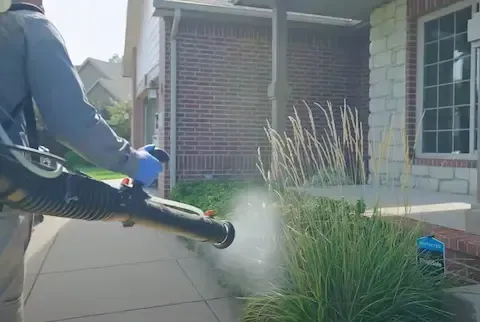
Creating a treated barrier around the home's exterior prevents new foraging trails from establishing and reduces the constant reinvasion pressure that Beloit's outdoor ant populations generate. Non-repellent perimeter treatments allow ants to contact the active ingredient and carry it back to exterior colonies, reducing the population source rather than simply deflecting it.
Exclusion work seals the gaps and cracks that ants exploit to enter structures. Common entry points in Beloit homes include gaps around window frames, where utility lines penetrate the foundation, at expansion joints in concrete, and where siding meets the foundation wall. Sealing these entries with appropriate materials reduces the need for repeated chemical treatment.
Seasonal Ant Pressure Patterns in Southern Wisconsin
Beloit's distinct seasonal cycle creates predictable windows of ant activity that homeowners should anticipate. Carpenter ant swarms typically occur in May and June, coinciding with warming soil temperatures and increasing daylight hours. Pavement ants become most visible from June through September as colonies expand and foraging intensity peaks. Odorous house ants maintain activity from early spring through late fall, with indoor invasions intensifying during heavy rain events when saturated soil floods outdoor nesting sites and drives colonies toward the drier conditions found inside structures.
Fall brings a final surge of activity as colonies prepare for winter dormancy. Carpenter ants establish satellite colonies in heated structures before cold weather arrives, pavement ants push deeper into foundation soils, and odorous house ants seek overwintering sites within wall voids and insulation. Addressing ant activity before this fall migration period prevents the establishment of indoor colonies that persist through winter and emerge with a head start the following spring.
Preventing Ant Infestations in Your Beloit Home
Long-term ant prevention combines moisture management, sanitation, and landscape maintenance. Repair water leaks promptly because moisture-damaged wood attracts carpenter ants, and standing water attracts foraging workers of all species. Keep kitchen surfaces clean and store food in sealed containers. Trim tree branches and shrubs so they do not contact the home, as vegetation bridges allow ants to bypass ground-level treatments.
Maintain a clean zone between landscape materials and the foundation. Mulch, leaf litter, and ground cover plants create ideal ant harborage directly adjacent to the home. Pull mulch back at least 12 inches from the foundation and ensure that grade directs water away from the structure. Remove dead trees, stumps, and stored firewood from proximity to the home, as these serve as carpenter ant parent colony sites from which satellite colonies extend into structures.
Annual professional inspections catch new activity before it becomes established. Beloit's seasonal patterns mean that spring and early summer are the most important monitoring periods, as this is when carpenter ant swarms occur, pavement ants become most active, and odorous house ants begin intensive foraging.
