Carpenter Ant or Termite Telling Them Apart in Beloit
Carpenter ants and termites both damage wood in Beloit, WI homes, but they leave behind different clues. The fastest way to tell them apart: carpenter ants have a pinched waist, elbowed antennae, and push sawdust-like frass out of their galleries. Termites have a broad, tube-shaped body, straight beaded antennae, and eat wood entirely — leaving no clean frass behind. Winged swarmers look similar, but termite wings are equal in length while ant wings are mismatched. Knowing which pest you have determines how urgent treatment needs to be and which method works.
What Does Carpenter Ant Damage Look Like in a Beloit Home?
Carpenter ants excavate wood to build galleries but do not eat it. They push the shavings out through small openings called kick-out holes. What you find beneath those holes looks like a pile of coarse sawdust mixed with insect body parts and soil — this is called frass. Run your finger through it and it feels gritty and dry.
Inside Beloit homes, carpenter ants target wood that is already moisture-damaged. Common spots include window sills, roof overhangs, basement rim joists, and any wood that stays damp through Rock County's freeze-thaw cycles. The galleries themselves are smooth and clean, almost polished-looking. You will not find soil packed inside them the way you would with termites.
If you hear faint rustling inside walls on warm spring nights — especially between April and June when Rock County temperatures first climb — that is often a carpenter ant colony becoming active after winter.
What Does Termite Damage Look Like in a Beloit Home?
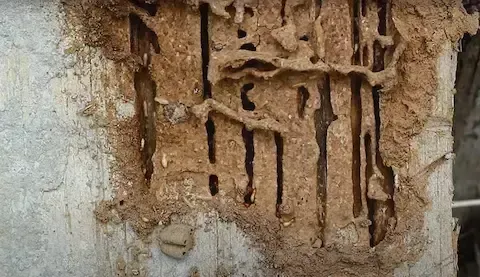
Subterranean termites, the species most common in southern Wisconsin, consume wood from the inside out. They pack their galleries with a mixture of soil, moisture, and fecal material. When you probe damaged wood with a screwdriver, it collapses in a layered, honeycombed pattern running with the grain. There is no frass pile outside. The mess stays inside the wood.
Termites also build mud tubes — pencil-thin shelter tubes of soil and debris — along foundation walls, crawl space piers, and basement block walls. These tubes protect the colony from drying out as workers move between soil and wood. Finding a mud tube on your Beloit foundation is a strong diagnostic signal, one that carpenter ants never produce.
Termite damage is almost always hidden until it is significant. Floors that feel spongy, doors that suddenly stick, or paint that bubbles without an obvious water source can all indicate a colony working behind the surface. For a complete walkthrough of what inspectors look for, read the termite inspection guide covering swarmer season in Rock County.
How Do You Tell the Swarmers Apart?
Both species produce winged reproductives — swarmers — in spring. In Beloit, termite swarms typically appear from late March through May, triggered by warm rain and rising soil temperatures. Carpenter ant swarmers usually emerge a few weeks later, often in May and June.
Here is how to compare them side by side:
- Wings: Termite swarmers have four wings of equal length. Carpenter ant swarmers have a larger front pair and a smaller rear pair.
- Waist: Termites have a broad, straight body with no visible waist. Carpenter ants have a sharply pinched node between the thorax and abdomen.
- Antennae: Termite antennae are straight and beaded. Carpenter ant antennae are elbowed at a clear angle.
- Color: Termite swarmers are dark brown to black. Carpenter ant swarmers in Rock County are often black, but some are reddish-brown, which can cause confusion.
If you find shed wings around window sills or sliding doors in your Beloit home, collect a sample in a zip-lock bag before calling. The wing shape alone can confirm species for an inspector before they arrive.
Does the Type of Wood Affected Tell You Anything?
Yes. Carpenter ants prefer wood that is already compromised by moisture — they are opportunists moving into damaged material. If you find their activity, it almost always means you have a water intrusion problem that preceded the infestation. Fixing the moisture source is part of any complete treatment plan.
Termites are less selective. Subterranean termites will attack sound, dry structural lumber once they have established a colony in the soil below. In Beloit homes with pier-and-beam foundations or older block basement walls, termites can work upward through foundation gaps and reach framing that shows no prior water damage at all. This is what makes them more structurally dangerous over time.
Which Pest Is More Urgent to Treat in Beloit?
Both require professional treatment, but termites carry more structural risk over a longer timeline. A mature subterranean termite colony in Rock County soil can number in the hundreds of thousands of workers foraging simultaneously. Over several years, they can compromise load-bearing members before any visible sign appears at the surface.
Carpenter ants damage wood more slowly and tend to stay near the moisture source. A colony rarely exceeds a few thousand workers. However, a satellite colony inside your walls can persist for years if the queen colony outside — often in a tree stump or woodpile on your property — is not addressed.
If you suspect either pest, schedule a termite inspection that covers both species. Rock County inspectors trained in wood-destroying organisms can probe structural members, check crawl spaces, and identify mud tubes, frass piles, and gallery patterns that confirm which pest is present and where the infestation boundary is.
What Should You Do Before the Inspector Arrives?
Clear access to the basement perimeter, crawl space entry points, and any areas where you have seen damage or swarmers. If you have found frass, do not vacuum it — leave it in place so the inspector can examine texture and content. If you found swarmers, save a specimen. Photograph any mud tubes on your foundation before touching them.
Note when you first observed the signs and whether activity seemed to follow a rain event or a warm spell. That timing helps narrow species and colony maturity. Beloit homeowners who bring that information to the inspection appointment consistently get faster, more accurate diagnoses.
