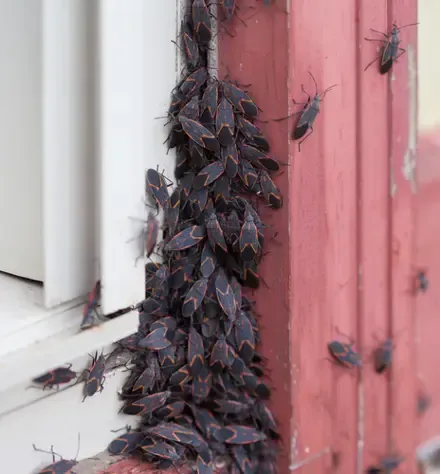
Fall Agricultural Pest Migration into Beloit Homes
When Rock County's corn and soybean fields begin to dry down each autumn, the insects that spent the warm months feeding and breeding in open agricultural land start looking for somewhere warmer to wait out winter. For homeowners along the edges of Beloit's south and west sides — where residential neighborhoods sit close to active farmland — that somewhere is often your house. Box elder bugs, multicolored Asian lady beetles, stink bugs, and cluster flies don't distinguish between a barn wall and a vinyl-sided ranch home. They're looking for warmth, and your exterior gives them exactly what they need.
Why Beloit's Agricultural Landscape Drives Fall Pest Pressure
Rock County remains one of Wisconsin's most productive agricultural counties, with thousands of acres of row crops surrounding the Beloit metro area on multiple sides. That proximity creates a consistent annual pattern: pest populations that peak in late summer across those fields begin moving toward structures as temperatures drop in September and October. The migration isn't random. Insects like box elder bugs orient toward radiant heat — the south and west faces of homes that collect afternoon sun become landing zones. Once a few individuals find their way to a warm surface, they release aggregation pheromones that draw in more. What starts as a handful of bugs on your siding can become a dense, unsettling mass within a matter of days.
Beloit's position along the Rock River corridor also means microclimates shift quickly in fall. A stretch of warm days in late October can amplify a second wave of movement just when homeowners thought the season was winding down. That second push often catches people off guard and sends significant numbers of insects into wall voids before anyone notices the entry points.
The Species You're Most Likely to See
Not every insect showing up on your home in October has agricultural roots, but several common fall invaders do. Understanding which species you're dealing with helps you respond correctly.
- Box elder bugs — Flat, black-and-red insects that spend summer on box elder and maple trees but move to structures in fall. They don't bite or cause structural damage, but they stain surfaces when crushed and become a significant nuisance in large numbers. Box Elder control is most effective when started before populations establish on the exterior.
- Multicolored Asian lady beetles — Introduced as a crop pest predator, these beetles are abundant in agricultural areas and swarm homes aggressively each fall. They bite lightly, produce a foul odor when disturbed, and can enter homes in extremely large numbers.
- Brown marmorated stink bugs — An invasive species that has expanded steadily through southern Wisconsin over the past decade. They feed on fruit and vegetable crops before migrating to structures. The distinctive shield shape and pungent defensive odor make them easy to identify.
- Cluster flies — These flies parasitize earthworms during summer and then seek overwintering sites in wall voids and attics. They're sluggish and slow-moving indoors but emerge in disorienting numbers on warm winter days.
When to Start Watching — and Acting
The practical window for meaningful prevention in the Beloit area runs from mid-September through mid-October. Once daytime temperatures regularly fall below 50°F, the bulk of migration is complete and insects that reached your home's exterior have likely already found their way inside. Acting before that window closes is the single most important timing decision you can make.
Walk the perimeter of your home in early to mid-September and pay close attention to the south and west faces first. Look for insects aggregating around window frames, door thresholds, utility penetrations, soffit vents, and where siding meets the foundation. These are the primary entry zones. A small aggregation visible during a midday inspection on a warm afternoon is an early signal that migration is underway toward your structure specifically.
For background on how seasonal beetle work runs in this region, including what changes as the calendar moves through fall, that context helps set expectations for timing and results.
Practical Sealing Steps That Actually Make a Difference
Exclusion is the most durable defense against fall invaders because it addresses the mechanism of entry rather than just the insects that have already made it inside. That said, exclusion only works if it's thorough. Partial sealing often pushes insects toward gaps you missed.
- Window and door frames — Inspect weatherstripping annually and replace any that has compressed, torn, or pulled away. Pay attention to the corners of frames where gaps open as wood expands and contracts.
- Utility penetrations — Pipes, cables, and conduits entering through exterior walls are among the most commonly overlooked entry points. Expanding foam or copper mesh stuffed into the gap before applying foam creates a more durable seal.
- Soffit and fascia gaps — These are direct routes into attic space, where cluster flies and lady beetles overwinter in large numbers. Fine mesh screening fastened with a staple gun is more effective than foam in these locations.
- Foundation-to-siding transitions — Where the mudsill meets the siding, small gaps often exist that insects exploit. Caulk rated for exterior masonry applications handles this area well.
What Professional Treatment Addresses That Sealing Alone Doesn't
Exclusion controls future entry but does nothing about the populations already present on your exterior or inside your wall voids. A perimeter treatment applied to the exterior siding, foundation, and eaves during the migration window reduces the number of insects that ever reach entry points in the first place. Timing is critical — applications made during active migration when insects are moving on warm surfaces perform significantly better than treatments applied after cold weather has driven everything into harborage.
Inside the home, if overwintering populations have already established in wall voids, vacuuming visible individuals is preferable to aerosol sprays, which can leave dead insects in inaccessible areas and attract secondary pests like carpet beetles. A pest professional can assess whether a void treatment is warranted or whether monitoring through winter with a plan for spring emergence management makes more sense for your specific situation.
Local Conditions Worth Knowing
Homes in Beloit's older neighborhoods near downtown tend to have more existing gap and crack opportunities simply because the housing stock is older and has experienced more cycles of settling and repair. This doesn't mean newer construction is immune — builder-grade weatherstripping and foam applications often degrade faster than expected, and many newer homes on the southeast side of the city sit adjacent to agricultural buffer zones that have seen rising stink bug pressure over the past several years. Wherever you are in the Rock County area, the fall migration pattern is consistent enough that treating it as an annual maintenance item — like winterizing outdoor faucets — is the most sensible approach.
