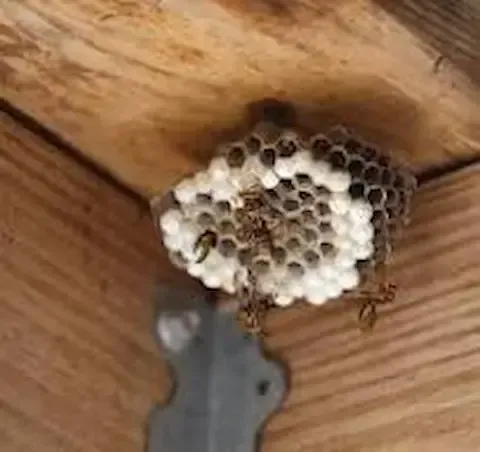
What Happens to Wasp Nests in Beloit Yards Through Fall
By the time Beloit's trees start dropping leaves and Rock County mornings dip below 50 degrees, most homeowners stop worrying about wasps. The nests seem quieter, activity slows, and it's easy to assume the problem has resolved itself. But what actually happens to wasp nests in Beloit yards through fall is more complicated than a simple freeze-and-done scenario — and understanding the cycle matters if you want to avoid a repeat infestation next spring.
How Wasp Colonies Change as Fall Arrives
Wasp colonies in the Beloit area spend all summer building population. A queen that started a nest in April or May with a handful of workers can grow her colony to several hundred — sometimes over a thousand — individuals by late August. That's peak season, and it's when encounters in your yard, near your deck, or under your eaves are most likely.
As fall settles in across Rock County, the colony dynamic shifts dramatically. The queen stops laying new worker eggs and begins producing reproductive males and new queens. The existing worker wasps — the ones you see foraging — have no more brood to feed and no long-term purpose. They become erratic, aggressive, and opportunistic. This is actually when wasp stings are most common in Beloit yards: not mid-summer, but September and early October, when workers are stressed and aimless.
Workers start dying off as temperatures drop. They don't hibernate. They don't migrate. They simply expire, one by one, as the cold sets in and food sources disappear. By the time Beloit sees its first hard frost, the vast majority of a colony is dead.
What Survives the Winter
The nest itself does not survive in any functional sense. It won't be reused. Paper wasp nests, yellow jacket nests, and bald-faced hornet nests are single-season structures. No colony will return to the same nest the following year.
What does survive is the mated queen. After mating in fall, new queens seek protected harborage — loose bark, wood piles, gaps in siding, attic insulation, or the sheltered overhang of a Beloit home's exterior trim. They enter a dormant state through winter and emerge in late April or May, ready to start an entirely new colony from scratch.
This is the detail most homeowners miss. The nest dies. The queen doesn't. And she often overwinters very close to where last year's nest was located — sometimes inside the same wall void, the same eave cavity, or the same garage corner. Next spring, she'll build nearby because the location was already proven suitable.
Risks That Carry Into Fall and Beyond
Even as the colony is dying, a few specific risks deserve attention in Rock County yards and structures.
- Late-season aggression: September worker wasps are not docile. Without larvae to tend, they forage for sugars and proteins and react aggressively to perceived threats. Outdoor meals, open garbage, and ripe fruit make your yard a flashpoint.
- Wall void nests: Yellow jackets that built inside wall voids, soffits, or siding gaps are particularly problematic in fall. As colonies die, decaying nest material and dead insects can attract secondary pests. Moisture from the decaying material can also create conditions favorable to mold inside walls.
- Queen overwintering in structures: If a queen overwinters inside your Beloit home's wall cavity or attic, she may emerge inside the structure in spring — a much worse outcome than finding a new exterior nest.
If you've had a nest near or inside your home's structure, fall is not the time to wait and see. It's the time to act before the queens disperse.
Should You Remove a Fall Wasp Nest in Beloit
The honest answer depends on where the nest is located.
Nests that are fully exposed — hanging from a tree branch 20 feet off the ground, attached to a garden fence, or mounted on a structure you don't use — may be left alone. Workers will be dead by November, and the nest won't be reused. As long as the location poses no immediate access risk and you're not dealing with a wall-entry situation, waiting out the cold is a reasonable choice for exposed exterior nests.
But nests located in eaves, soffits, overhangs, deck railings, exterior utility boxes, or anywhere adjacent to foot traffic warrant removal even in fall. Those locations are exactly where overwintering queens will shelter, and clearing the nest gives you a chance to treat the site and reduce next year's risk. wasp removal done in fall — after worker populations drop but before full freeze — is often safer and less reactive than mid-summer emergency treatment when colony populations are at their peak.
For nests inside walls or structural voids, professional intervention is necessary regardless of season. Attempting to seal a wall void without properly treating and clearing the nest can trap decaying material, attract new pests, and create a worse situation by spring.
What Fall Treatment in Rock County Actually Looks Like
When a pest control professional addresses a fall wasp situation in Beloit, the approach typically involves direct nest treatment with residual insecticide, physical removal where accessible, and assessment of the entry and harborage points around the structure.
For eave and soffit situations — extremely common in Beloit's older housing stock in the near-Northside neighborhoods and along the Rock River corridor — treatment includes sealing entry points after the colony is eliminated. This prevents both re-colonization in spring and secondary pest entry through the same gaps over winter.
If you've noticed repeat nests in the same location year after year, that's a site-suitability issue, not bad luck. The same features that attracted one queen will attract the next. Treatment needs to address the structural access, not just the visible nest. You can read more context on identifying the specific species involved in our hornet nest guide, which covers how yellow jackets and bald-faced hornets differ in behavior and nesting habit.
Timing Your Decision Before Rock County Winter Sets In
Beloit's first consistent frosts typically arrive in October. By mid-November, most wasp activity has stopped entirely. That window between mid-September and mid-October — when workers are dying but queens haven't yet fully dispersed to overwinter sites — is actually an ideal time to have problem locations treated and sealed.
Acting during that window means fewer active workers during treatment, less colony aggression to contend with, and an opportunity to cut off next year's infestation before the queen ever finds her winter shelter. Missing that window doesn't mean you're out of options, but it does mean the spring response will be more reactive and potentially more disruptive.
If you're watching a nest near your Beloit home's roofline, eave, or deck go quiet this fall, the smart move is an inspection before the ground freezes — not a wait-and-see approach that sets up the same cycle for next year.
