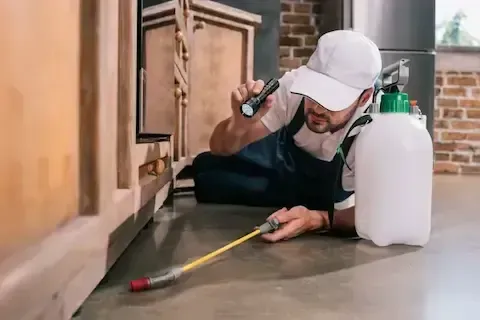
Preparing a Beloit WI Kitchen for Cockroach Treatment
Preparing your Beloit, WI kitchen for cockroach treatment takes about two to three hours but dramatically improves whether a single visit eliminates the infestation. The goal is giving the technician clear access to every surface where cockroaches hide and feed — behind appliances, inside cabinet bases, under the sink, and along baseboards. When those areas are cluttered or blocked, product cannot reach harborage zones and roaches survive. This guide walks through the exact prep steps so your treatment day goes smoothly and the results hold.
Step 1: Empty All Lower Cabinets and the Pantry
Pull everything out of lower kitchen cabinets and your pantry before the technician arrives. Set food items in sealed plastic bags or a cooler in another room. Remove pots, pans, small appliances, cleaning supplies, and liner paper. The technician needs to apply product directly to cabinet interiors, especially the back corners and underneath shelves where German cockroaches cluster. Leaving items inside forces the technician to work around them, which leaves untreated gaps. Wipe down shelf surfaces after emptying so no food residue interferes with adhesion of gel baits or residual sprays.
Step 2: Pull Appliances Away From the Wall
Move your refrigerator, stove, and dishwasher out at least eighteen inches. The motor housing on the underside of a refrigerator is one of the warmest spots in a Beloit kitchen and a prime cockroach harborage. The gap behind a stove accumulates grease that cockroaches feed on. If your dishwasher has a toe-kick panel, remove it. These areas are inaccessible during a standard inspection but are often where the heaviest activity is concentrated. If appliances are too heavy to move alone, ask a household member for help or notify the pest control company in advance so they can bring equipment.
Step 3: Clean Grease and Food Debris Thoroughly
Cockroach treatments work best in a clean environment. Grease residue on stove surrounds and under drip pans competes with gel bait, reducing its attractiveness. Wipe down the stove top, the range hood filter, and the sides of appliances. Sweep and mop the floor under appliances once they are pulled out. Empty and clean the toaster tray. Wash dishes that were left in the sink. This sounds like more effort than it is — a focused ninety-minute cleaning session is enough. For roach control in Beloit to be effective from the first visit, food competition with bait products has to be minimized.
Step 4: Remove Pets, Children, and Sensitive Items
Clear fish tanks and reptile enclosures from the kitchen entirely, or cover them tightly and turn off the air pump during treatment and for two hours after. Remove pet food and water bowls. Pesticide products used in cockroach treatments are formulated for indoor use, but direct exposure to aquatic animals is a documented risk. Keep children and pets out of the treated area until the product has dried completely, which usually takes thirty to sixty minutes. Store any dishes that sit on open shelving in a cabinet or cover them with a clean cloth.
Step 5: Seal or Relocate Food Items
Any food not in a sealed container should move out of the kitchen for treatment day. This includes fruit in a bowl, bread on the counter, spices on an open rack, and anything stored on top of the refrigerator. Cockroaches in Beloit kitchens tend to exploit exactly these open-storage areas as secondary food sources. Sealing food removes the competing attractant and keeps it uncontaminated. After the treatment is complete and surfaces are dry, you can return items to their original spots.
Step 6: Do Not Pre-Spray or Use Store Products Before the Visit
This is where many households undermine their own treatment. Spraying a commercial fogger or contact killer in the days before a professional visit scatters cockroaches deeper into walls, spreads chemical residue that degrades gel bait, and makes accurate assessment harder. If you have been battling the infestation with store-bought products, stop at least seventy-two hours before the scheduled service. Read our cockroach control guide to understand why professional-grade bait placement outperforms most consumer aerosol approaches and why disrupting that process hurts outcomes.
Step 7: Plan to Stay Out for the Right Amount of Time
Ask your technician specifically how long you need to stay out of the kitchen after treatment. Gel bait applications typically require no evacuation period, while residual spray applications may require thirty to sixty minutes of ventilation. Combination treatments may require longer. In a Beloit home during winter months when windows stay closed, ventilation time matters more than in summer. Have a plan so you are not standing at the door guessing. A quick call to the company before treatment day eliminates confusion on the day itself.
