Sealing Mouse Entry Points in Beloit WI Older Houses
Sealing mouse entry points in Beloit, WI older houses means locating gaps where pipes, wires, and settling foundation cracks create openings, then filling them with copper mesh, foam backer rod, and caulk in the right order. Rock County homes built before 1970 have particular vulnerability at sill plates, utility penetrations, and garage door frames. Before the first hard frost arrives in the Beloit area, crews prioritize the exterior shell first, working from grade level up. This guide walks you through the same order of work professionals use so you seal effectively and permanently rather than temporarily.
Step 1: Walk the Perimeter at Ground Level
Before touching any materials, inspect your foundation from the outside on a dry day. In Beloit's older neighborhoods along Bluff Street and the near south side, limestone block foundations shift over decades and produce gaps at the mortar joints and sill plate connection. Crouch low and look for daylight, staining from moisture, or rust streaks that mark where metal has been sitting in contact with soil. Mark every opening larger than a quarter inch with a piece of blue tape. Mice need only a gap the diameter of a dime to enter, so anything visible to the naked eye qualifies. Photograph each location so you have a before record and a clear inventory list before buying materials.
Step 2: Gather the Right Exclusion Materials
Hardware store foam alone will not hold. Mice chew through expanding foam in under an hour when motivated. The correct material sequence for Rock County conditions is copper mesh first, then foam backer rod for depth, then paintable latex caulk or mortar depending on the substrate. For gaps larger than two inches, use galvanized hardware cloth with quarter-inch openings secured with masonry anchors or sheet metal screws. Pick up a tube of rodent-stop foam as a secondary layer only behind the mesh, never as the sole barrier. Buy more copper mesh than you think you need because you will find additional gaps once you start working. This is especially true in Beloit homes with older plumbing stacks that pass through multiple floors.
Step 3: Seal Foundation Penetrations First
Water lines, gas lines, electrical conduit, and dryer vents all pass through the foundation or rim joist and each one is a potential entry corridor. Work from the outside inward. Pack copper mesh tightly around the pipe using a flathead screwdriver or wooden dowel, leaving no air space between the mesh and the pipe surface. Fill the remaining void with backer rod, then cap with mortar or exterior caulk. On the interior side, repeat the mesh layer so any mouse that defeats the outer seal meets a second barrier immediately. For mouse control that actually lasts through winter, the rim joist cavity is the single highest-priority area in any Beloit house with a partial basement or crawl space.
Step 4: Address the Garage and Side Door Frames
Attached garages on Beloit properties built in the 1950s and 1960s almost universally have gaps at the bottom corners of the overhead door frame and at the side entry door threshold. The concrete apron settles away from the foundation over time, leaving a triangular void at each lower corner. Fill these with hydraulic cement if the gap is structural, or with copper mesh and exterior caulk if it is surface level. Replace door sweeps on any interior garage door that leads to the living space. A standard brush sweep is not sufficient. Use a solid rubber or neoprene bulb sweep that compresses flat when the door closes. Check by sliding a business card under the closed door. If the card slides freely, the seal is inadequate.
Step 5: Seal Interior Utility Chases and Pipe Penetrations
Once the exterior shell is addressed, move inside and target the spaces where pipes travel between floors. In older Beloit homes, these chases are often entirely open inside the wall cavity, creating vertical highways from the basement to the attic. At each floor penetration, pack copper mesh around the pipe and cap with fire-rated expanding foam or caulk. Check under kitchen and bathroom sinks where supply and drain lines pass through the cabinet floor. These are among the most commonly missed entry points in Rock County homes during routine inspections. If you have already noticed activity, reading about how mouse work is done will help you understand where to concentrate your interior efforts based on dropping patterns and smear marks.
Step 6: Inspect the Roofline and Soffit Vents
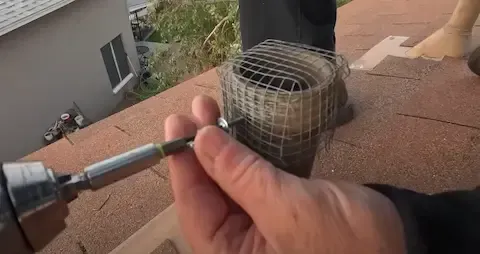
Mice climb. They reach rooflines via tree branches, downspouts, and utility lines that run against the exterior wall. Check soffit vent screens for torn mesh or gaps at the corners. Replace any vent cover with a rusted or missing screen insert. In Beloit, heavy snow loading during January and February can buckle plastic vent covers enough to create openings that were not there in October. Install galvanized steel vent covers rated for wildlife exclusion rather than standard builder-grade plastic. Where utility lines enter near the roofline, install a cone guard on the line at least eighteen inches from the structure to prevent climbing access. This step is often skipped but is critical for second-floor and attic activity.
Step 7: Verify Your Work Before the First Frost
After sealing, do a final verification walk on a sunny day. Look at every sealed point from outside and confirm no mesh is protruding past the surface in a way that weather will pry it loose. Check that all caulk lines are smooth and fully adhered with no bubbling. Inside, use a flashlight to check each pipe penetration and confirm the mesh is tight. Then do a second check thirty days later after the first temperature drop, because materials contract in cold weather and small gaps can reopen at caulk joints. Rock County typically sees its first sustained cold period in late October, so complete all sealing by mid-October to catch any failures before mice are actively seeking winter harborage. A properly sealed older Beloit house holds exclusion results for multiple seasons without repeat intervention.
