Summer Ant Trails in Beloit Kitchens and Pantries WI
Every summer in Beloit, the same scene plays out in kitchens and pantries across Rock County. A single ant appears near the stove. Then another near the dog bowl. By the following morning, a thin dark line of foragers is moving in both directions along the baseboard, carrying crumbs back to a colony that may be tens of thousands strong. Understanding why this happens — and what actually stops it — is the difference between spending the season chasing ants around your home and breaking the cycle for good.
Why Beloit Kitchens Attract Summer Ant Trails
Ant activity in Beloit kitchens peaks between late June and early September, driven by a combination of heat, colony growth, and food availability. Wisconsin summers push ant colonies into their most aggressive foraging phase. Worker ants leave the nest in search of three things: carbohydrates, protein, and moisture. Your kitchen offers all three within a few square feet.
The pavement ants and odorous house ants most commonly found trailing through Beloit homes are drawn to residues that don't register as spills to most people. A thin film of syrup near the toaster, the dried sugar ring under a coffee maker, water droplets around a pet bowl, or the grease film on a stovetop edge — these are the food sources that trigger scouts to lay a pheromone trail back to the colony. Once that chemical highway is established, hundreds of workers will follow it with remarkable precision.
What Makes Rock County Properties Especially Vulnerable
Rock County's mix of older residential construction and dense tree canopy creates favorable conditions for ant pressure. Many homes in Beloit's established neighborhoods — particularly around the westside and near the Rock River corridor — have foundation gaps, deteriorating caulk lines, and utility penetrations that have never been properly sealed. These aren't extraordinary defects. They're normal in any home older than 20 years, and they're exactly what ant scouts exploit.
Moisture is also a consistent factor. Beloit's summer humidity means condensation forms regularly along basement walls, under sinks, and around window frames. Ants that nest in outdoor soil near the foundation follow moisture gradients indoors, especially during dry spells when surface foraging becomes less productive. The landscape beds common in Beloit's residential neighborhoods — mulched, moist, and close to the foundation — provide ideal nesting conditions that put colonies just a few inches from entry points.
The Cleanup Routine That Actually Matters
Surface cleaning stops trailing ants temporarily, but it won't break the cycle unless you're targeting the right areas. Wiping a counter removes visible crumbs but leaves behind the pheromone trail embedded in the surface. That chemical signal continues to recruit new foragers even after the food source is gone.
An effective kitchen routine during ant season in Beloit should include several consistent habits. Wipe down surfaces with a mild soap and water solution rather than just a dry cloth — soap disrupts pheromone residue more effectively than dry wiping. Store dry goods like cereal, pasta, and sugar in sealed containers rather than original packaging. Move pet food and water bowls away from walls, and don't leave standing water in bowls overnight. Clear the area under and behind the refrigerator, where crumbs accumulate out of sight and grease drips from the coils above. Check the pantry for older canned goods or packages with compromised seals, particularly those that contain anything sweet or starchy.
For a deeper look at how ant trails connect back to colony behavior and what treatment timelines look like, the ant control walkthrough covers the full picture from inspection through follow-up.
Where Ants Enter and How to Block Them
Identifying the entry point matters more than most homeowners realize. Ants trailing along a baseboard in the kitchen may have entered through a gap around the dishwasher supply line, a crack in the foundation visible from the exterior, a gap behind the stove where the wall transitions to cabinets, or around a pipe fitting under the sink. Following the trail to its origin — rather than just treating the middle section — tells you where sealing work is needed.
Common entry points in Beloit homes include the gap where exterior utility lines penetrate the foundation, deteriorated weatherstripping at the base of exterior doors, cracks along the mortar in older brick foundations, and the space where kitchen cabinetry meets the exterior wall. Caulking these areas with a durable silicone or paintable latex caulk removes the physical path that scouts use to bring trails indoors. This doesn't eliminate the colony, but it forces foragers to find a new route — or fail to find one at all.
When Professional Treatment Is the Right Call
If you've cleaned thoroughly, sealed visible entry points, and removed every accessible food source, but trails reappear within a few days, the colony is large enough and established enough that surface-level disruption won't solve the problem. This is typical of mid-summer colonies in Rock County that have had weeks to grow and identify reliable food sources inside your home.
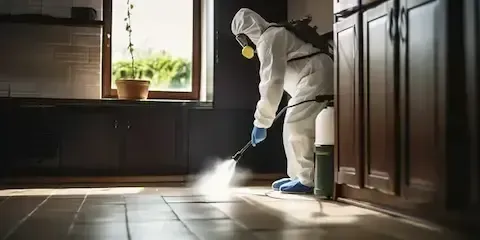
Professional treatment targets the colony, not just the visible trail. Trained technicians identify the nest location — which is often in the soil outside rather than inside the structure — and apply appropriately labeled products at points that get carried back to the queen. This is why bait-based approaches outperform spray-and-wipe methods for most Beloit ant infestations. Spraying foragers only removes the workers you can see without reaching the reproductive core of the colony.
Timing also matters. Treatment applied in early to mid-summer, before a colony hits peak population, produces faster results with fewer follow-up applications. Waiting until late August, when colonies are at maximum size and already preparing for overwintering, typically means a longer treatment timeline into the fall season.
If summer ant trails have become a recurring issue in your Beloit kitchen or pantry, Ant Control services built around Rock County conditions offer a more durable solution than seasonal spot treatments. The goal is to address the colony, the entry points, and the conditions that invite ants back year after year — not just clear the trail that's visible today.
Keeping the Kitchen Clear Through the Season
Breaking an ant trail in your Beloit kitchen requires working on three levels at once: eliminating the food and moisture sources inside, sealing the physical paths ants use to enter the structure, and — when needed — treating the colony itself before it rebuilds the trail from a new direction. None of these steps alone is sufficient. But together, they create the conditions that make your kitchen genuinely unattractive to foraging ants through the rest of the summer and into fall.
