Bee or Wasp Telling Them Apart in Beloit WI Backyards
Spending time in a Beloit backyard during summer almost guarantees a close encounter with a flying, stinging insect at some point. Whether you are grilling near Riverside Park, gardening in a southside neighborhood, or watching kids play in the yard, the instinct when something buzzes past is often the same — get away from it. But before you call anyone or reach for a can of spray, it genuinely helps to know what you are dealing with. Bees and wasps behave differently, live differently, and require completely different responses from homeowners and pest professionals alike.
Why the Distinction Matters for Rock County Homeowners
In Beloit and throughout Rock County, identifying whether you have bees or wasps on your property is not just a matter of curiosity. It directly determines who you should call and what outcome you should expect. Honey bees, for example, are protected in many contexts and can often be relocated rather than exterminated. A beekeeper or a professional trained in Bee Removal can sometimes move an active colony without harming a single insect. Wasps, on the other hand, typically do not produce anything that warrants saving the colony, and an extermination approach is usually appropriate.
Getting this identification wrong wastes time and money. Calling a pest control crew to a honey bee hive may result in an unnecessary extermination when relocation was possible. Calling a beekeeper to a yellow jacket nest is equally mismatched — beekeepers do not work with wasps. Knowing what you are looking at from a safe distance puts you in control of the next step.
Body Shape Is Your Fastest Visual Clue
The single most reliable way to tell bees and wasps apart at a glance is body shape. Bees have a rounded, somewhat stocky appearance. Their abdomens are wider and often fuzzy, giving them a soft, almost plump look. Honey bees and bumblebees in particular have visible hair on their bodies, which serves the practical purpose of carrying pollen.
Wasps — including yellow jackets, paper wasps, and hornets — look noticeably different. They have a distinct, narrow waist pinched between the thorax and abdomen. Their bodies are smooth and shiny, not hairy. This difference in build reflects a difference in lifestyle. Wasps are predators and scavengers. They do not collect pollen, so they never evolved the fuzzy bodies that bees developed.
If you can get a safe look at the insect in question — from a few feet away, without approaching the nest — that waist is usually enough to settle the matter. Narrow and smooth means wasp. Rounded and fuzzy means bee.
Color Patterns and What They Tell You
Color is helpful but less definitive than body shape, because both bees and wasps can display yellow and black banding. Yellow jackets are the species most likely to be confused with bees because of this shared color pattern. However, yellow jacket yellow tends to be brighter and more vivid, while honey bee coloring is often more amber or golden, with a slightly muted appearance.
Bumblebees add orange-yellow banding to their black bodies and are considerably larger than honey bees. Paper wasps are slender and tend toward brown and dull yellow tones. Bald-faced hornets are black and white rather than yellow and black, which makes them easier to distinguish once you know what to look for.
In the Beloit area, yellow jackets are among the most common nuisance wasps, especially in late summer when their colonies are at peak size and their natural food sources start declining. They become more aggressive around food during this period, which is when most backyard conflicts happen near garbage cans, outdoor dining areas, and fallen fruit from trees.
Nest Location and Construction
Where and how the colony builds its home is another strong indicator. Honey bees build wax comb in protected cavities — wall voids, tree hollows, attic spaces, or inside structures. Their comb is golden and has a characteristic hexagonal cell pattern. If you can see wax comb, you are almost certainly looking at bees.
Wasps build paper nests made from chewed wood fiber mixed with saliva. These can look like a small paper ball under a deck eave, a large layered globe in a tree or bush, or a flat open-comb structure attached to an overhang. Yellow jackets often nest underground, taking over abandoned rodent burrows or gaps in the soil. Hornets tend to build large paper spheres in trees or shrubs. Paper wasps build small, open-faced combs that hang down from eaves and look like an upside-down umbrella.
If you find a nest in the ground near a Beloit garden bed or lawn area and notice significant traffic of smooth, narrow-waisted insects, yellow jackets are the most likely explanation. Underground yellow jacket nests in Rock County can grow quite large by August and September, sometimes housing thousands of workers.
Behavior Around Humans
Behavioral cues matter too. Honey bees are generally focused on flowers and tasks. Unless you are near their hive and they perceive a threat, they will typically ignore you. Bumblebees are even more docile and rarely sting unless handled or directly threatened.
Wasps are considerably more reactive. Yellow jackets in particular will sting with little provocation, especially when defending a nest or competing for food. They can also sting multiple times, unlike honey bees, which die after a single sting. If an insect seems agitated, returns repeatedly to your food or drink, and has that smooth, narrow body shape, it is very likely a yellow jacket.
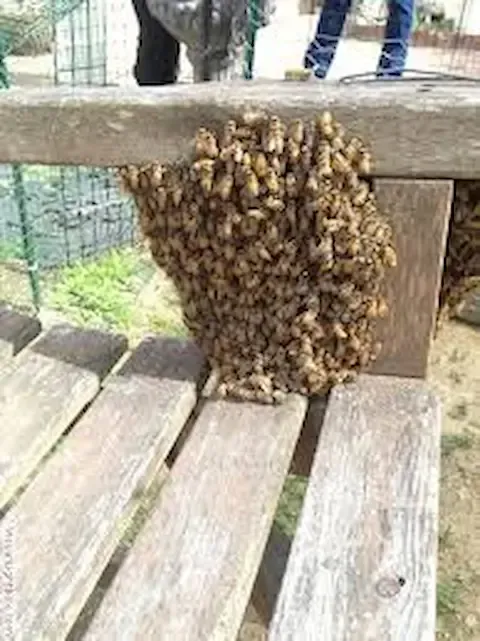
Swarms of bees — which occasionally appear in Beloit during spring and early summer — are actually among the least dangerous situations involving bees. A swarm is a cluster of bees in transit between hive locations. They are not defending a fixed home yet and are generally calm. For more detail on handling these situations, see our honey bee walkthrough.
What to Do Once You Have Made the Identification
After confirming what you are dealing with, the path forward becomes clearer. If you have identified bees — especially honey bees with visible wax comb — contact a professional who specializes in live removal or relocation. Extermination should be a last resort for honey bees, given their importance to local agriculture and Rock County's garden ecosystem.
If you have identified wasps, particularly yellow jackets nesting underground or in a wall void, a licensed pest control professional is the right call. Wasp nests in active use require careful treatment, and DIY approaches near an established colony carry real risk of multiple stings and an angered colony response.
Taking a moment to observe carefully before acting will save you frustration, protect beneficial insects where possible, and help you get the right professional to your Beloit property the first time.
