Carpenter Ants Active Inside Beloit Homes During Fall
Most Beloit homeowners associate ants with summer picnics and kitchen counters, but carpenter ants operate on a different schedule. As temperatures drop across Rock County and the hardwoods along the Kishwaukee River corridor begin to shed their leaves, carpenter ants that established a satellite colony inside your walls earlier in the year don't simply disappear. They slow down, move deeper into protected voids, and wait. The structural damage they caused during spring and summer remains, and in many cases the colony continues to expand through fall without any visible sign above the surface.
Why Carpenter Ants Remain Active Indoors After Summer
Outdoor carpenter ant colonies respond to falling temperatures by entering a period of reduced activity. The workers stop foraging, the queen reduces egg production, and the colony settles into protected wood or soil until spring. Indoor satellite colonies behave very differently. A satellite colony is a fragment of a larger parent colony that has moved into a warm, human-heated structure. Because your home maintains a consistent interior temperature through October, November, and into December, the ants inside your walls experience none of the seasonal cues that would trigger dormancy.
This means carpenter ant workers inside Beloit homes continue tunneling through wood, expanding galleries, and moving between floors throughout the fall. Homeowners who dismiss ant sightings in October as a fluke are often dealing with a mature satellite colony that has been present since at least early spring.
Conditions That Attract Carpenter Ants to Beloit Structures
Carpenter ants do not eat wood the way termites do. They excavate it, preferring wood that is already softened by moisture. In Beloit, the building stock includes a substantial number of homes built between 1920 and 1970, many with original wood framing around basement windows, crawlspace sills, and covered front porches. These areas are the first to accumulate moisture from seasonal rain, snowmelt, and condensation against concrete foundations.
Specific conditions that create high-risk zones in local homes include:
- Wood siding or trim in direct contact with soil grade along foundation walls
- Flat or low-slope porch roofs that pool water against structural posts
- Crawlspace areas without adequate vapor barriers, common in older Rock County construction
- Improper downspout extensions that direct roof runoff toward foundation wood
- Decks built with untreated lumber or with ledger boards that trap moisture against the house rim
When wood framing reaches and holds moisture content above 15 percent, it becomes an ideal location for a carpenter ant satellite colony. The ants are not creating the moisture problem, but they are reliably drawn to it.
How to Recognize Active Carpenter Ant Activity in Fall
Spotting a single large black ant crossing your kitchen floor in October is not conclusive, but it is a prompt to look more carefully. Carpenter ants are noticeably larger than pavement ants or odorous house ants, typically ranging from a quarter inch to over half an inch in length. Workers from an indoor satellite colony often emerge at night to forage for food and water, which is why sightings tend to cluster in kitchens, bathrooms, and along plumbing chases.
Additional indicators of an established indoor colony include:
- Frass deposits — Small piles of coarse sawdust mixed with insect fragments and soil near baseboards, window frames, or on exposed beams
- Rustling sounds — A faint crinkling or scratching inside walls, particularly noticeable at night in quiet rooms
- Winged ants indoors — Reproductive swarmers emerging inside the home during winter or very early spring, indicating a well-established colony
- Soft or discolored wood — Probing suspect areas with a screwdriver reveals hollowed galleries running with the wood grain
If you notice any combination of these signs, the satellite colony has almost certainly been present for more than one season.
The Parent Colony Problem
Treating only the satellite colony inside your home rarely resolves a carpenter ant infestation. Satellite colonies maintain chemical trails back to the parent colony, which is almost always located outdoors in a dead stump, a rotting log along a fence line, or in deteriorating wood near a detached garage. In neighborhoods along Milwaukee Road or near Riverside Park, mature trees and older landscaping provide abundant parent colony habitat within foraging range of homes.
Effective control requires identifying and disrupting both locations. If the parent colony continues to send workers into your structure through the same entry points, repeated interior treatments produce only temporary results. Tracing the foraging trail back to its source, eliminating that source where possible, and sealing entry points along the foundation and utility penetrations is the only approach that produces lasting reduction in activity.
For a broader look at how ant activity patterns differ by season and species across the region, our ant control overview covers the full seasonal picture for Rock County homeowners.
What Fall Treatment Looks Like
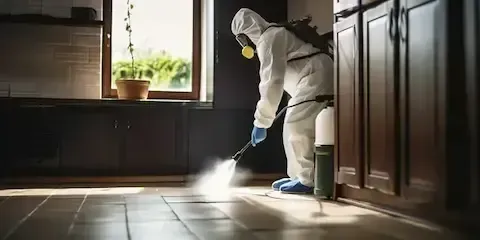
Professional carpenter ant treatment in fall focuses on two parallel actions. The first is locating the active galleries inside the structure using a combination of inspection, probing, and in some cases acoustic detection. Targeted void treatments using appropriate dust or foam formulations reach ants that are no longer foraging actively but remain inside the wood. The second action is exterior perimeter work, applying residual product along the foundation, around window and door frames, and at utility entry points before the ground freezes and limits access.
Fall is actually an effective treatment window because workers returning to a satellite colony carry treated material back into the gallery system more efficiently when they are not actively foraging across large distances. The compressed travel radius of a fall colony concentrates exposure. Ant Control services in Beloit are structured to account for this seasonal behavior, prioritizing gallery location and perimeter sealing before winter closes off exterior access.
Moisture Control as a Long-Term Deterrent
No treatment plan fully protects a structure that continues to provide ideal moisture conditions for carpenter ants. After a professional treatment, reducing moisture accumulation in high-risk areas is the most effective way to prevent recolonization. In practice, this means ensuring gutters drain freely and downspouts extend well away from the foundation, improving crawlspace ventilation or installing a vapor barrier, replacing wood that has already been compromised by rot, and maintaining a gap between soil grade and wood siding around the perimeter of the home.
Rock County homeowners who address the moisture source alongside the ant colony typically see significantly better long-term outcomes than those who treat the infestation alone. The combination of targeted treatment and structural correction is the standard that professional pest management in Beloit is built around.
