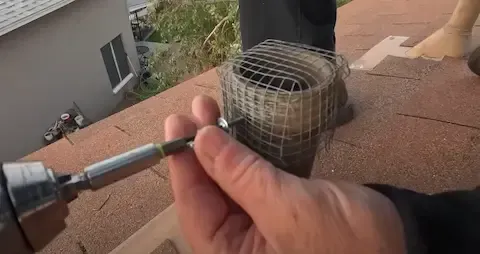
Fall Mouse Entry into Beloit WI Older Home Foundations
Every autumn in Beloit, the same predictable sequence plays out across Rock County. Soybean and corn fields east of town get harvested, temperatures dip below 50 degrees at night, and mice that spent the summer outdoors start moving toward warmth. Older homes along the Rock River corridor, on Bluff Street, and throughout the Merrill neighborhood face the heaviest pressure because their foundations carry decades of settled cracks, deteriorated mortar, and utility penetrations that were never sealed with mice in mind. Understanding exactly how entry happens, and where gaps are most likely to form in an older Beloit structure, is the first step toward keeping them outside where they belong.
Why Fall Triggers the Migration in Rock County
Mice are not reacting to cold alone. They respond to a combination of shrinking food sources, shorter daylight hours, and the physical disruption of harvest equipment turning over their cover. Once fields are cut, the dense vegetation that provided both food and shelter disappears almost overnight. Open ground offers no protection, so mice radiate outward toward tree lines, fence rows, and ultimately building foundations.
In Beloit specifically, the geography accelerates this pattern. Residential neighborhoods sit close to active agricultural land on the city's eastern and southern edges. When Rock County's harvest window runs from mid-September through late October, mice don't travel far before they reach houses. A mouse needs only a gap the size of a dime to pass through a foundation wall. In structures built before 1970, gaps that size are rarely difficult to find.
Foundation Features That Create Entry Points in Older Beloit Homes
Older Beloit construction relied heavily on poured concrete, stone, and block foundations. Each material ages differently, and each creates its own category of vulnerability.
- Mortar joint erosion: Block and stone foundations develop gaps at mortar joints as the material absorbs moisture through Wisconsin freeze-thaw cycles. A joint that appears shallow in summer can open noticeably after a hard winter. By the time fall arrives, some joints along the base of older foundations have widened enough to allow entry without any other assistance.
- Settled poured concrete cracks: Poured concrete foundations shift as soil beneath them compresses over decades. Hairline cracks that formed in the 1960s or 1970s have had time to widen. Vertical cracks along corners and horizontal cracks mid-wall are common in neighborhoods like Bluff Street where older housing stock is concentrated.
- Utility penetrations: Gas lines, water supply lines, electrical conduit, and HVAC components all pass through foundation walls. In older homes, these openings were often made with hand tools and sealed loosely with hydraulic cement or wire mesh that has since corroded. Around the pipe itself, the gap is frequently large enough for a mouse to compress through.
- Sill plate gaps: The wood sill plate sits directly on top of the foundation wall and forms the base of the framed wall above it. Settling, rot, and the absence of foam sill seal in pre-code construction leave irregular gaps at this junction. Mice that reach the foundation exterior can follow this line around the entire perimeter of the house looking for soft spots.
Crawl Space and Basement Entry Patterns
Beloit's older housing stock includes a large number of partial basement homes and full crawl spaces, particularly in neighborhoods developed between the 1920s and 1950s. Crawl spaces present their own access profile. Vented crawl spaces have screened openings, but older screen frames are often bent, corroded, or completely missing sections. Mice that enter the crawl space from a damaged vent have immediate access to the entire underside of the floor system and can move upward through wall cavities.
Basement windows at or near grade present a similar problem. In homes along the lower Rock River neighborhoods, grade has shifted over decades and some basement windows now sit partially below soil level. Soil pressure against the frame creates gaps at corners and along the sill that mice exploit readily in October and November when pressure from the fields is highest.
Common Mistakes Homeowners Make Before Winter
Stuffing steel wool into visible gaps is the most common DIY response, and it does have some value. However, steel wool compresses over time, corrodes, and can be pushed aside if it isn't secured. Using it without a backing of hardware cloth or caulk behind it often provides only a temporary barrier. Mice that are motivated by cold will work at weak points repeatedly over several nights.
A second frequent mistake is addressing only the obvious gaps visible from standing height. Most mouse entry in older Beloit homes occurs within the bottom 18 inches of the foundation, where cracks and pipe penetrations concentrate. Inspecting at ground level with a flashlight, running your hand along mortar joints, and probing around utility lines is more productive than a visual scan from several feet away.
Addressing only the inside of the home is another gap in most homeowner approaches. Setting traps in the basement after mice are already present confirms they're inside but does nothing to stop the next wave. Exclusion work on the exterior, completed before the harvest begins or immediately after, is what reduces the population trying to enter in the first place. For a comprehensive approach before winter, review our rodent exclusion plan which outlines the exterior and interior steps together.
Materials That Hold Up Through Wisconsin Winters
Not every sealant performs reliably through Rock County freeze-thaw cycles. Standard latex caulk fails quickly in foundation applications because it doesn't adhere to concrete under wet conditions and cracks as temperatures cycle. Polyurethane-based sealants, hydraulic cement for active crack repairs, and galvanized hardware cloth backed with exterior-grade caulk around utility penetrations are the materials that maintain their integrity through Beloit winters.
For crawl space vents, replacing deteriorated screen with 16- or 19-gauge galvanized hardware cloth secured with screws rather than staples is the correct long-term repair. Foam backer rod inserted into larger gaps before sealant application prevents the sealant from thinning out inside deep cracks where adhesion is poorest.
When Professional Exclusion Makes Sense
A full foundation perimeter of an older Beloit home can involve dozens of individual penetrations, mortar repairs, and sill plate gaps. Addressing all of them in a single season before October pressure peaks is difficult to accomplish with a standard weekend inspection. A professional exclusion assessment identifies the full scope of entry points with the systematic approach that piecemeal repairs tend to miss.
If you've found evidence of mice inside your home, or you've been through multiple fall seasons with the same recurring problem, professional mouse control paired with targeted exclusion work is the combination that breaks the annual cycle. Waiting until mice are well established inside means more interior damage, more contamination, and a longer resolution timeline heading into the coldest months of a Rock County winter.
