Summer Mosquito Breeding Sites in Beloit WI Backyards
Mosquitoes do not appear randomly in Beloit, WI backyards. They breed in specific, predictable locations, and most of those locations are created unintentionally by homeowners during the summer months. Understanding where mosquitoes lay eggs and how quickly populations develop gives you a meaningful advantage before the season peaks. Rock County summers create ideal conditions for mosquito reproduction, and backyards across Beloit often contain several active breeding sites without residents realizing it.
How Mosquitoes Use Standing Water in Beloit Yards
Female mosquitoes require standing water to complete their reproductive cycle. They deposit eggs on or near the water surface, and larvae develop entirely in water before emerging as adults. What surprises most homeowners is how little water this requires. A bottle cap holding water for four to five days is enough. A low spot in a lawn that retains water after rain is enough. Beloit's summer storm patterns, combined with warm temperatures that push larval development faster, mean that new mosquito generations can complete their cycle in as little as seven to ten days.
The practical implication is straightforward. If water sits undisturbed on your property for more than a week during summer, it is a potential breeding site. The challenge is identifying every location where that happens, because many of them are easy to overlook during routine yard time.
Common Breeding Sites Found in Rock County Backyards
Certain yard features consistently produce mosquito breeding conditions across Beloit neighborhoods. Checking these locations weekly during summer months eliminates a significant portion of your property's reproductive capacity.
- Clogged gutters: Gutters that collect leaf debris hold water for extended periods after rain. They are elevated, shaded, and largely undisturbed, which makes them productive breeding environments. Cleaning gutters in spring and checking them after summer storms reduces this risk substantially.
- Plant saucers and trays: Potted plants placed on saucers collect water with every rain or watering cycle. These containers are refilled repeatedly throughout the season, creating continuous breeding opportunities close to the home's exterior.
- Tarps and pool covers: Any tarp or cover that sags collects water in its low points. This includes covers on boats, grills, firewood piles, and playground equipment. A single depression in a tarp can hold enough water to support a breeding population.
- Bird baths: Bird baths are among the most consistent mosquito breeding sites in Beloit yards. Still water that is not changed at least every five to six days will develop larvae. Dumping and refilling bird baths twice a week eliminates this source entirely.
- Unused containers: Buckets, wheelbarrows, recycling bins left outdoors, and old tires collect water quickly and often go unnoticed. Turning these upside down or storing them indoors between uses prevents accumulation.
- Low lawn areas: Sections of lawn where water pools after rain and does not drain within 24 to 48 hours create breeding conditions directly in the grass. These areas become particularly productive mid-summer when soil is compacted and drainage is reduced.
Vegetation and Shade as Resting Habitat
Beyond breeding sites, mosquitoes in Beloit backyards rely heavily on dense vegetation for daytime resting. Adult mosquitoes shelter in tall grass, thick shrubs, and leaf litter during the hottest parts of the day. This is where they spend most of their time between feeding and breeding activity.
Managing vegetation is a secondary but meaningful part of reducing mosquito pressure. Keeping grass cut to a consistent height, trimming shrub bases so air circulates near the ground, and removing accumulated leaf litter along fence lines and property edges removes the resting habitat that allows daytime mosquito populations to persist between feeding periods. Properties along the Rock River corridor in Beloit may see higher mosquito pressure given proximity to natural water, which makes vegetation management on those lots especially relevant.
The Weekly Yard Check That Controls Breeding
Professional mosquito control recommendations consistently emphasize source reduction as the foundation of any effective program. A weekly yard check during June, July, and August covers the entire development cycle. If you eliminate standing water before larvae can mature, you interrupt reproduction before it contributes to your backyard population.
A practical weekly check takes less than fifteen minutes and covers the following sequence. Start at the roof level by checking gutters visually or by running water through them to confirm drainage. Move to the perimeter of the house and check any saucers, trays, or containers near the foundation. Inspect any tarps or covers for depression points where water collects. Check bird baths and water features. Walk the lawn looking for low spots that are still soft or damp more than two days after the last rain. Finish at the property edges and fence lines where containers and debris tend to accumulate unnoticed.
Homeowners who run this check consistently through the summer report meaningful reductions in mosquito pressure. It does not eliminate the population entirely, since mosquitoes also travel from neighboring properties and natural areas, but it removes the breeding contribution from your own yard.
When Breeding Pressure Exceeds Source Reduction Alone
There are situations where source reduction alone does not bring mosquito pressure to an acceptable level. Properties adjacent to natural drainage areas or retention ponds in Rock County may have consistent influx from surrounding breeding zones that a weekly yard check cannot counteract. Large lots with complex landscaping create more potential sites than weekly inspection reliably catches. Mid-summer weather patterns that involve repeated heavy rains keep soil saturated and create new pooling zones faster than they can be manually managed.
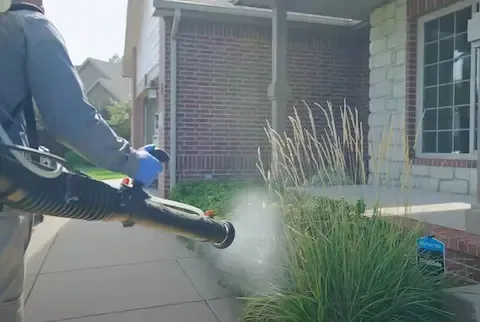
In these situations, treatment targeting adult mosquitoes and larval development sites provides a layer of control that goes beyond what source reduction delivers on its own. Understanding how mosquito work begins at a professional level helps clarify which approach fits your property's specific conditions and what a seasonal program can realistically achieve compared to individual yard management.
Building a Summer Mosquito Strategy for Beloit Properties
The most effective approach to summer mosquito control in Beloit combines consistent source reduction with realistic expectations about what you can control. Your yard's breeding sites are within your direct management. The natural and neighboring sources that contribute adult mosquitoes to your property are not. Identifying every standing water location on your lot and eliminating it on a seven-day cycle handles the controllable portion. Addressing persistent adult populations through treatment handles the portion that source reduction cannot reach.
Rock County's summer heat accelerates the entire mosquito lifecycle, which means the window between a rain event and a new adult emergence is short. Building the weekly inspection into your summer routine before mosquito pressure becomes noticeable gives you a head start that makes the rest of the season significantly more manageable.
